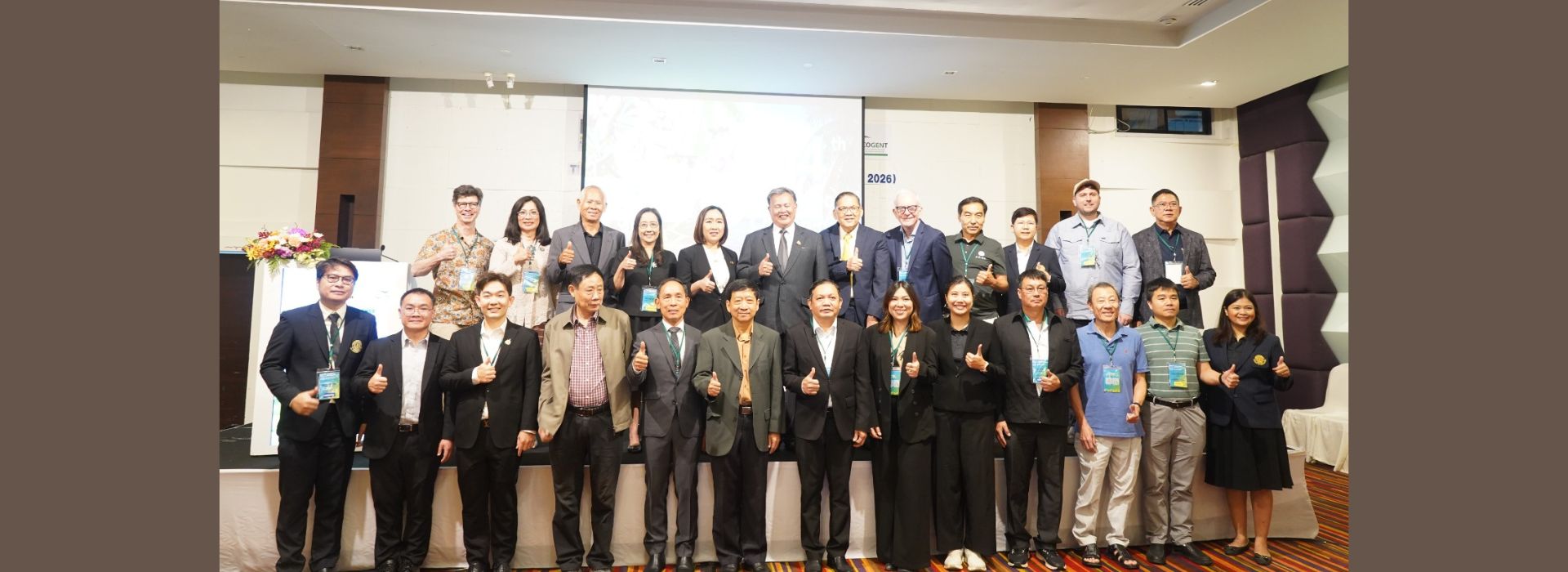
The International Coconut Community (ICC) successfully concluded its participation in the 4th International Conference of Tropical Plants (ICTP 2026), held from 23–25 March 2026 at The Zign Hotel, Pattaya, Thailand. The conference, jointly organized by Hainan University, China and Kasetsart University, Thailand, was convened under the overarching theme “Cultivating Climate Smart Resilience for a Sustainable Bio-Economy.”
As a co-organizer of the event, ICC played a central role in shaping the coconut-focused agenda, organizing a dedicated Coconut Technical Session and a Coconut Genomics Workshop, both coordinated in collaboration with the ICC–COGENT International Thematic Action Group on Genomics and Breeding (ITAG 02) through the dedicated leadership and coordination of Dr. Siwaret Arikit, Leader of the ITAG 02.
The event brought together a diverse group of stakeholders including researchers, policymakers, industry representatives, and development partners from across ICC member countries and beyond, reaffirming the growing global importance of coconut as a strategic crop for food security, climate resilience, and bioeconomic development.
ICC’s Keynote Highlights Strategic Vision for the Global Coconut Sector
A key highlight of ICC’s participation was the keynote address delivered by Director General Dr. Jelfina C. Alouw during the main conference on 23 March 2026. Her presentation, titled “From Germplasm to Global Markets: Advancing Coconut Research Excellence, Crop Protection, and Evidence-Based Governance,” emphasized the multifaceted role of coconut in supporting sustainable development across tropical regions.
The keynote underscored the importance of integrating scientific innovation, policy frameworks, and market-oriented strategies to unlock the full potential of the coconut sector. It highlighted the dual mandate of ICC in advancing policy advocacy, capacity building, and market linkages, alongside the scientific coordination role of COGENT in managing global coconut genetic resources.

Dr. Jelfina further emphasized the need for evidence-based governance, digital transformation, and value addition, while addressing key challenges such as climate change, declining productivity, and market volatility. The presentation reinforced the urgency of strengthening collaboration among ICC’s 21 member countries, which collectively account for over 90 percent of global coconut production.
Dedicated Coconut Session Showcases Science, Innovation, and Industry Linkages
On 24 March 2026, ICC organized a dedicated Coconut Technical Session under the theme “Resilient Coconut Futures: Bridging Genetics, Smart Agriculture, and the Bioeconomy.” The session provided a focused platform to discuss cutting-edge developments and emerging challenges across the coconut value chain.
The session was formally opened with remarks from Kasetsart University and ICC leadership, followed by special remarks from Ms. Kanjana Thongna, Director of the Horticulture Research Institute (HRI), Department of Agriculture, Thailand, and ICC Alternate National Liaison Officer. In her address, she highlighted the critical role of coconut in supporting livelihoods, food security, and the bioeconomy, while emphasizing Thailand’s commitment to advancing genetic conservation, smart agriculture, and value-added coconut industries.
Similarly, Asst. Prof. Dr. Sukanya Rattanatabtimtong of Kasetsart University underscored the importance of global collaboration in advancing coconut research and innovation, noting that the session reflects a shared commitment to translating scientific knowledge into practical impact.
The session featured a series of expert presentations covering a wide range of topics, including coconut germplasm conservation and breeding, tissue culture advancements, agronomy and trade dynamics, molecular breeding, genomic selection, pest diagnostics, and product innovation.
Renowned speakers from leading institutions such as CPCRI (India), KU Leuven (Belgium), NSTDA (Thailand), CIRAD (France), CRI (Sri Lanka), and Visayas State University (Philippines) contributed to dynamic discussions that emphasized the need for integrated, science-driven solutions.
A total of 82 participants physically attended the coconut session, including ICC National Liaison Officers, representatives from member countries, international experts, university students, and private sector stakeholders. The session also attracted online participation, reflecting strong global interest in the topic. Hands-On Genomics Workshop Advances Capacity Building
Building on the momentum of the technical session, ICC and its partners conducted a Coconut Genomics Workshop on 25 March 2026, themed “From Coconut DNA to Breeding Applications.”
The workshop was designed as a practical, hands-on training program aimed at strengthening technical capacity in coconut genomics and breeding. It covered key topics such as SNP data analysis, genetic diversity assessment, population structure, genome-wide association studies (GWAS), and genomic selection tools. With 30 participants attending physically and approximately 30 additional participants joining online, the workshop provided a valuable platform for interactive learning and knowledge exchange. Participants included researchers and genebank focal points from major coconut-producing countries such as Papua New Guinea, Indonesia, Malaysia, India, Sri Lanka, and the Philippines.


The active involvement of international partners, including CIRAD, further enriched the technical depth of the workshop. Contributions from CIRAD experts emphasized the application of genomic tools in breeding programs and the importance of collaborative research networks in advancing crop improvement. Field Visit Highlights Industry Innovation and Value Addition
As part of the conference program, participants also visited Merit Food Products Co., Ltd. in Chonburi Province, a leading integrated coconut product manufacturer and exporter. The field visit provided participants with valuable insights into commercial-scale coconut processing, organic farming systems, and value-added product development.
This practical exposure complemented the technical discussions, reinforcing the link between research, industry, and market opportunities within the coconut value chain.
Strengthening Global Partnerships for Coconut Development
The successful organization of the coconut session and genomics workshop reflects the strong collaboration between ICC, Kasetsart University, the Department of Agriculture of Thailand, and international research partners.
In her closing remarks, ICC Director General Dr. Jelfina C. Alouw highlighted that the combination of the technical session and genomics workshop represents a comprehensive and forward-looking platform, bridging strategic dialogue with practical capacity building. She emphasized that the future of the coconut sector depends on science-driven innovation, strengthened international collaboration, and effective knowledge transfer. The workshop outcomes are expected to enhance participants’ ability to apply genomic tools in breeding programs, improve germplasm management, and support the development of climate-resilient coconut varieties.
Exploring Future Collaboration Opportunities in Thailand
In addition to the conference proceedings, ICC engaged in a productive consultation with officials from the Horticulture Research Institute (HRI), Department of Agriculture, Thailand, including Ms. Kanjana Thongna, ICC Alternate National Liaison Officer and Director of HRI, along with Ms. Wilaiwan, Director of Research Administration Division and Ms. Peyanoot Naka, Vice Chair of the Conservation and Development of Coconut Oil Forum of Thailand (CDCOT) and Advisor to the Department of Agriculture.
The discussion focused on the upcoming Udon Thani International Horticultural Expo 2026, scheduled to be held from 1 November 2026 in Thailand. Both parties explored potential avenues for ICC’s participation and collaboration in the Expo, including opportunities to showcase the global coconut sector, promote sustainable coconut-based innovations, and strengthen international visibility of ICC’s initiatives.
This engagement reflects ICC’s continued efforts to expand its strategic partnerships and enhance its presence in major international platforms, while promoting the role of coconut in sustainable agriculture, bioeconomy, and rural development.
Way Forward: From Knowledge to Action
ICTP 2026 demonstrated that the coconut sector is at a critical juncture, where traditional practices must be complemented by modern scientific approaches to address emerging challenges. The integration of genomics, digital technologies, and smart agriculture offers significant opportunities to transform coconut production systems. Moving forward, ICC will continue to promote initiatives that strengthen capacity building, research collaboration, and data sharing among member countries. The organization also aims to further engage with international partners to support the adoption of advanced technologies and enhance the global competitiveness of the coconut sector.
The outcomes of the coconut session and genomics workshop are expected to contribute to the broader goals of sustainable agriculture, climate resilience, and bioeconomic development, in line with global development agendas.

The ICC’s active engagement at ICTP 2026 reaffirmed its leadership role in advancing global cooperation in the coconut sector. By bringing together science, policy, and industry, the event successfully highlighted the importance of collaborative action in shaping a resilient and sustainable future for coconut. With strong participation from both physical and online attendees, and meaningful contributions from international experts and partners, ICTP 2026 stands as a milestone in ICC’s ongoing efforts to strengthen the global coconut community.