
International Coconut Community
Established in 1969 | a UNESCAP intergovernmental organisation
Water Based
About
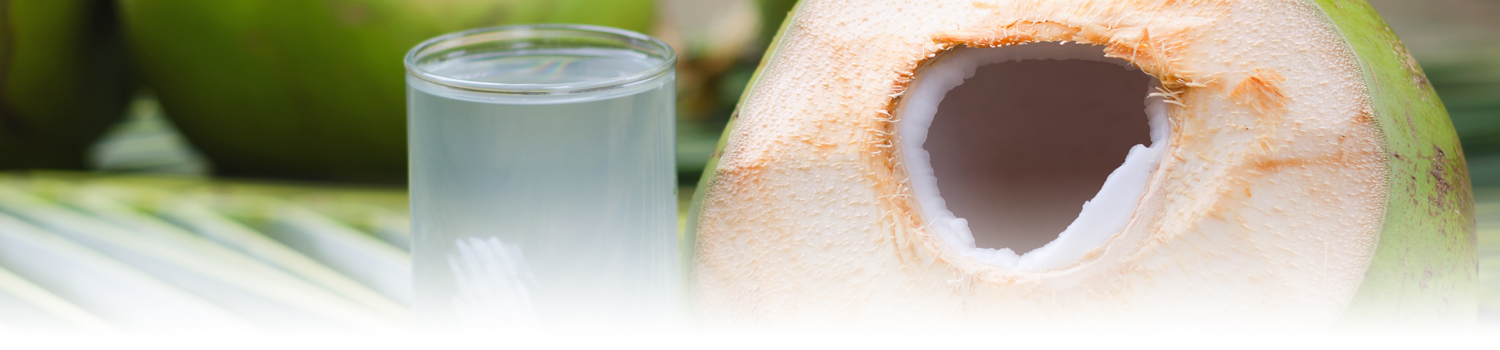
Coconut water (also coconut juice) is the clear liquid inside coconuts (fruits of the coconut palm). In early development, it serves as a suspension for the endosperm of the coconut during the nuclear phase of development. As growth continues, the endosperm matures into its cellular phase and deposits into the rind of the coconut pulp.[1] The liquid inside young coconuts is often preferred to the liquid of a ripened coconut. Coconut water from young green coconuts is also known specifically as buko juice in Philippine English.[2]
Our Products
Tender Coconut Water
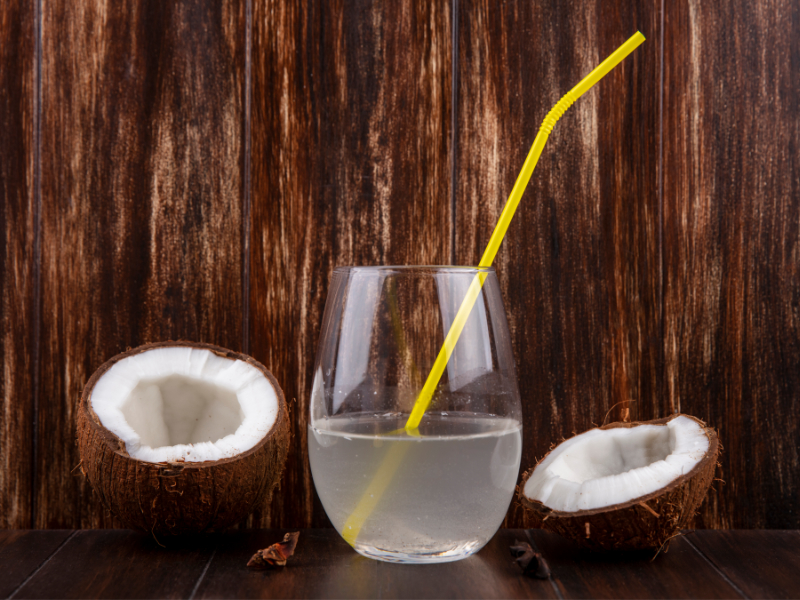
Tender Coconut Water is an eco friendly refreshing drink and also a natural isotonic beverage which balance electrolyte in our blood. Delta lactone is responsible for the characteristic flavor of tender coconut water. The tender coconut water has several functional activities such as hydrating electrolytic fluid, anti-carcinogenic, anti-myocardial infarction, hepatoprotective, antioxidant, anti-ageing, and anti-thrombotic effects (Campbell-Falck et al. 2000; Loki and Rajamohan 2003). Packed tender coconut water involves collection of water, filtration, adjustment of pH, total soluble sugar and taste, pasteurization, filtration and packaging. Ultra filtration system can also be used to clarify the tender coconut water (Jayanti et al. 2010). It can either be packed in bottles or in cartons. The bottled drink can be stored for three months at ambient temperature. (Reddy et al. 2007) developed a system for non thermal preservation of tender coconut water using low ash filter paper and cellulose nitrate membrane which reduced the microbial population and retained the organoleptic properties. Coconut water is rich in dietary fiber, enzymes, vitamin C, amino acids, minerals such as magnesium and potassium. But it is low in calories, chlorides and cholesterol. When coconut water is applied on skin, it reduces acne, lowers the visible signs of ageing, stretch marks and cures eczema. On drinking coconut water, it boosts the immune system and fights against common cold and flu; prevents muscle cramps, cures heartburn, dengue fever and dysentery; aids the kidneys in filtering the toxins and thus reduces the risk of kidney stones. water refers to the liquid endosperm of a tender coconut at an age of approximately 9 months from time of pollination, the period before the solid endosperm or white meat forms. It is a pure and nutritious beverage in the natural state. The coconut husk is an excellent package for the water which contains sugars, minerals, amino acids and vitamins. Tender coconut water is a natural source of electrolytes, minerals, vitamins, complex carbohydrates, Amino acids, and other nutrients. The natural carbohydrate content is between 4-5% of the liquid solution. This makes coconut water particularly suitable for the burgeoning sports drink market. According to Sports Science Institute (USA), sports drinks containing under 5% carbohydrates are likely to provide benefits, while those exceeding 10% carbohydrate content, like most soft drinks are associated with abdominal cramps, nausea, and diarrhea. Isotonic and bacteriologically sterile properties of fresh coconut water, straight out of the nut, promoted its use as a direct plasma replacement by military forces in the Asian theatre of combat during World War II. It has caloric value of 17.4 per 100gm. "It is unctuous, sweet, increasing semen, promoting digestion and clearing the urinary path," says Ayurveda on tender coconut water (TWC). Spray evaporation can be used to create coconut water concentrate. Fresh coconut water is used to make frozen coconut water. Fresh coconut water obtained under sanitary conditions from a freshly opened shell. Before concentration, suspended particles and oils were removed by centrifugation, while minerals were removed from centrifuged coconut water by passing it through an ionic resin filled column to give it a sweet taste. Depending on the concentration level, the concentrate had a shelf life of 6 to 24 months. About 800g of concentrate would be produced from ten litres of coconut water. After diluting to the necessary strength, the concentrate can be frozen or preserved in cans and used in the production of carbonated and non-carbonated beverages. (Muralidharan and A Sr 2011).
Snow Ball Tender Nut
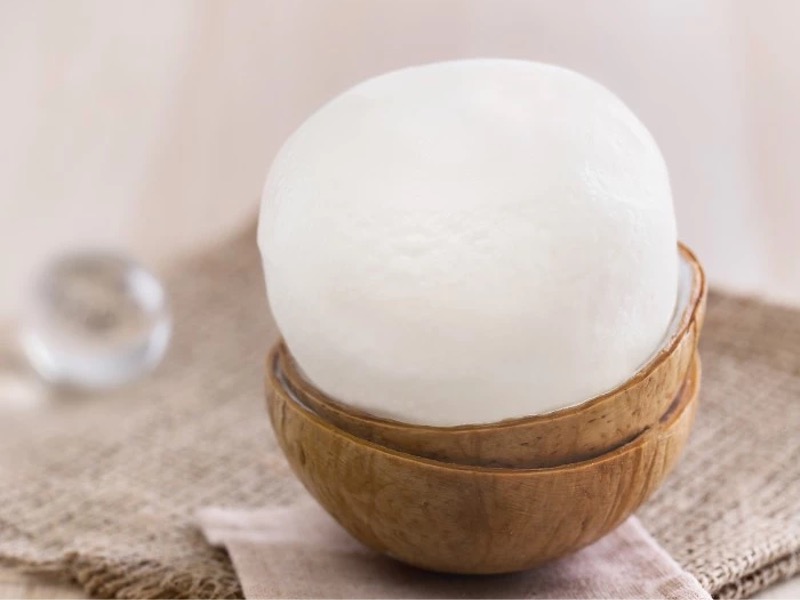
Snow ball tender nut is a delicate coconut with no husk, shell, or testa that is round, soft, and white in color. Snow ball sensitive nut can be made with an 8-month-old coconut. Inserting a straw into the top white tender coconut kernel allows you to drink the tender coconut water. A snow ball nut machine invented by the Central Plantation Crops Research Institute (CPCRI) in Kasaragod, Kerala, is used to create a groove in the shell. The snow ball is scooped out of the shell by putting a scooping instrument between the tender kernel and the shell. Because the sensitive coconut water is not exposed to the atmosphere, it preserves its sterility. If the sensitive nut is separately packed and chilled under hygienic circumstances, the shelf life can be extended to more than 10 days.
Nata de Coco
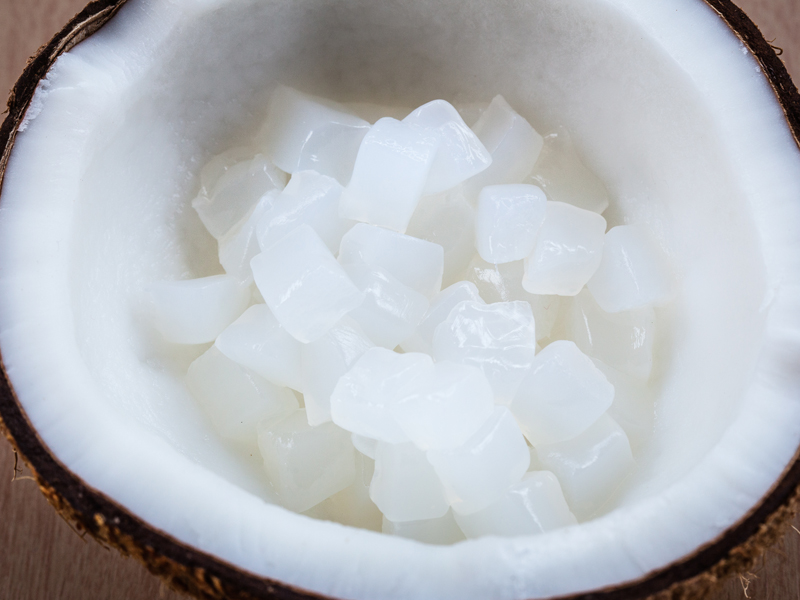
What is nata de coco? Its terminology comes from Spanish, and the meaning is floating But, in food science, we usually call it bacterial cellulose Nata only consists of water and cellulose w/out any presence of hemicellulose nor lignin like in plant tissue. Due to the cellulose chain, nata gel is known with its high crystallinity, water absorption and mechanical strength. All these properties make nata a delicious gel, especially when you eat it as a dessert Since nata consists of cellulose, in our stomach it acts as a fiber which is good for our gut. Nata-de-coco is a chewy, translucent, jelly like food stuff prepared by fermentation of matured coconut water. It is most frequently sweetened as a candy or dessert, and can accompany with various stuffs like drinks, ice cream, puddings and fruit mixes. This dessert can be prepared by culturing Acetobacter xylinum through fermentation of coconut water which produces microbial cellulose for gel formation (Cannon and Anderson 1991). For the production of nata de coco with soft surface and chewy texture, (Jagannath et al. 2008) reported that pH 4, 10 % sucrose and 0.5% ammonium was the most appropriate conditions. Culture solution was prepared by addition of sugar to the mature coconut water which is inoculated with Acetobacter xylinum, kept it for 2-3 weeks without any disturbance in a vessel. A jelly like substances was formed at the top of the vessel. This jelly was separated and washed with water in order to remove the acids adhere on the surface of the jelly and then it was cut into pieces and packed.
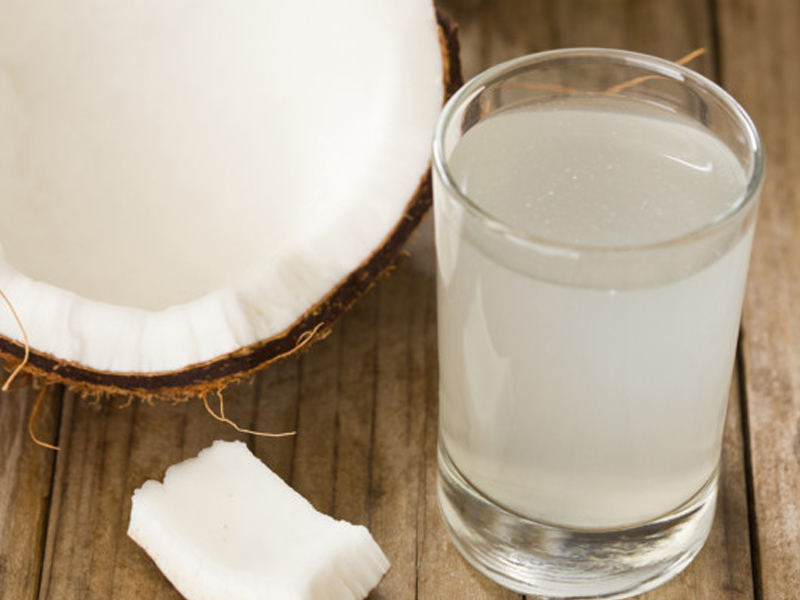
Vinegar
Coconut vinegar, a natural alternative to synthetic vinegar, can be made from coconut water or coconut sap. It's often used in pickles, salad dressings, and sauces as a flavour and preserving ingredient. It's high in vitamins and minerals including calcium, phosphorus, iron, and sodium, and it's also anti-inflammatory and anti-microbial (Shahidi et al. 2008). Coconut vinegar is made from sugar-enriched coconut water that has undergone alcoholic and acetic fermentation. After filtering, the coconut water is sweetened with refined sugar to a Brix of 15 and the combination is brought to a boil. After cooling, the pasteurized mixture is inoculated with active dry yeast (1.5g/liter). After 5 to 7 days of treatment. The coconut vinegar is extracted by siphoning after an acidity process that lasted up to 7 days. Vinegar is the product obtained by acetic acid fermentation of alcohol containing solutions and is used as an acidulant in foods. It must contain at least 4% acetic acid.It is usually colourless or has the colour of the raw material. The pH is between 2.0 and 3.5. It is an oxidative fermentation in which diluted solutions of ethanol are oxidized by Acetobacter (bacterial culture) with the oxygen of air to acetic acid and water. C2H5 OH + O2 => CH3 COOH + H2O + 439 kcal (Heat) (Ethanol) (Acetic acid) All 'Mashes' (alcoholic ferment) contain ethanol, water and nutrients for the acetic acid bacteria. Vineger is designated by the particular raw material used viz. Sugar/jaggery vinegar, coconut vinegar etc.
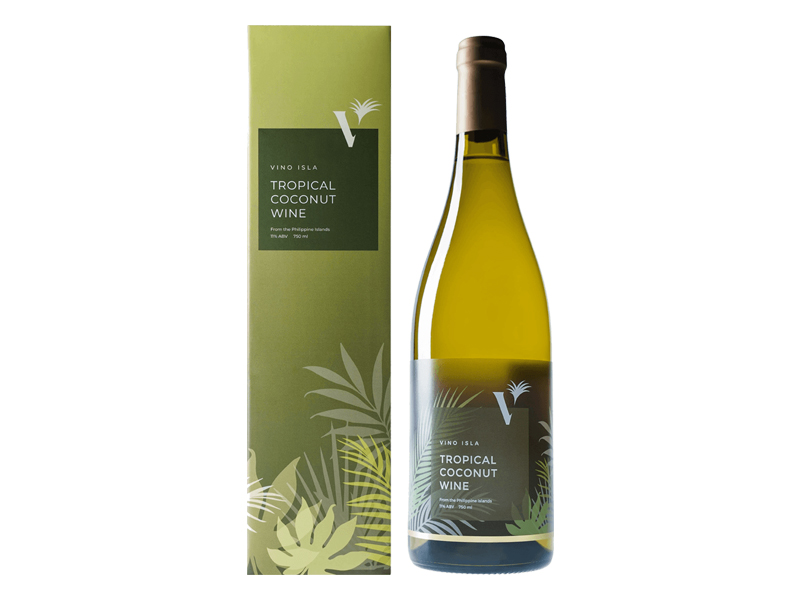
Wine
Coconut toddy, commonly known as palm wine, is a milky white drink created by tapping immature coconut inflorescence. Neera is the name given to the delicious sap that has not been fermented. To keep the sap from fermenting, a pinch of lime is put to the earthen pot that collects it. Toddy is made from natural sap fermentation, which begins abruptly as the sap runs from the spadix. Coconut sap fermentation is caused by flora such as bacteria and fungi. Toddy ferments completely in six to eight hours. Toddy has a 4-6 percent alcohol level and a short shelf life.The main ingredient of the fermented sap is sucrose and there is very little reducing sugar, although other sugars like glucose, fructose, maltose and raffinose are presentFresh toddy contains 14.1 percent total soluble solids, which reduces to 11.4 percent after natural fermentation during storage, and alcohol, protein, ascorbic acid, and titratable acidity all increase with fermentation, so it must be consumed within 12 hours of collection to avoid an acidic or sour taste (Hariharan 2012). Coconut arrack is an alcoholic liquid made from toddy that is usually distilled to between 33 and 50 percent alcohol by volume.