Nata de Coco
What is nata de coco?
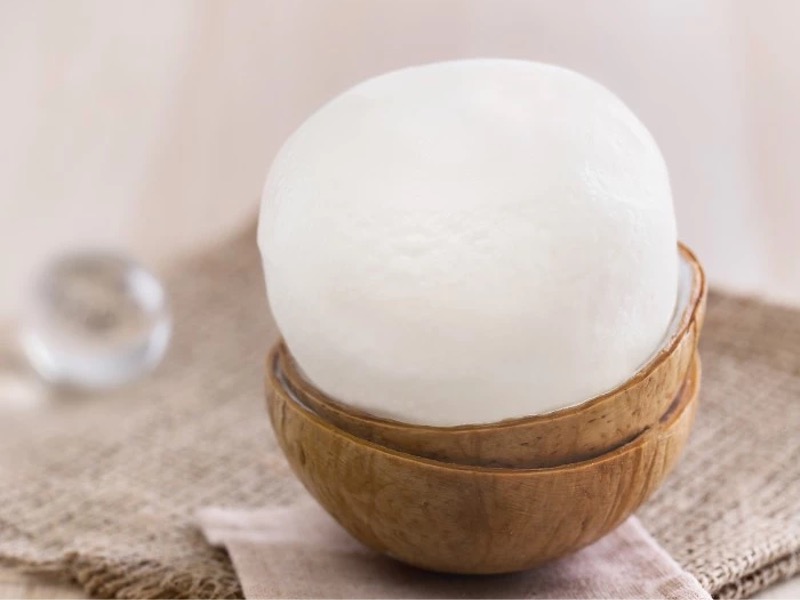
Its terminology comes from Spanish, and the meaning is floating But, in food science, we usually call it bacterial cellulose Nata only consists of water and cellulose w/out any presence of hemicellulose nor lignin like in plant tissue. Due to the cellulose chain, nata gel is known with its high crystallinity, water absorption and mechanical strength. All these properties make nata a delicious gel, especially when you eat it as a dessert Since nata consists of cellulose, in our stomach it acts as a fiber which is good for our gut.

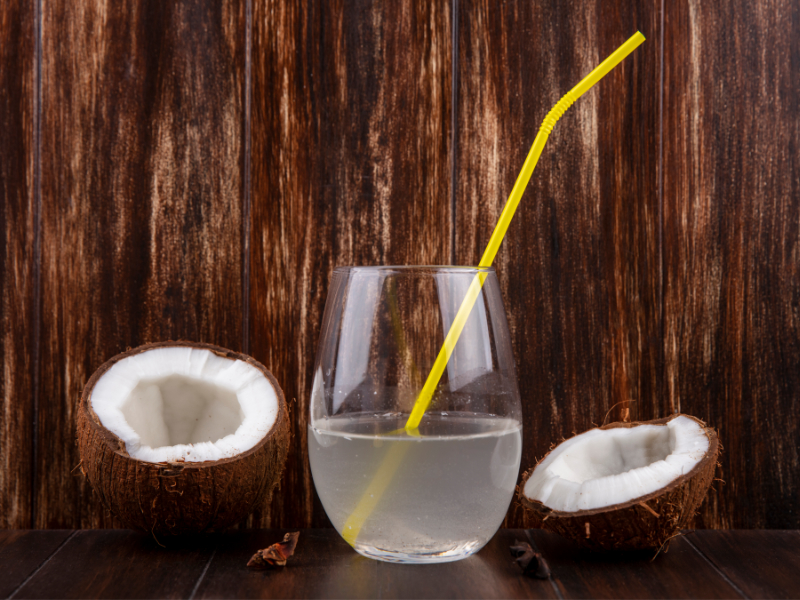
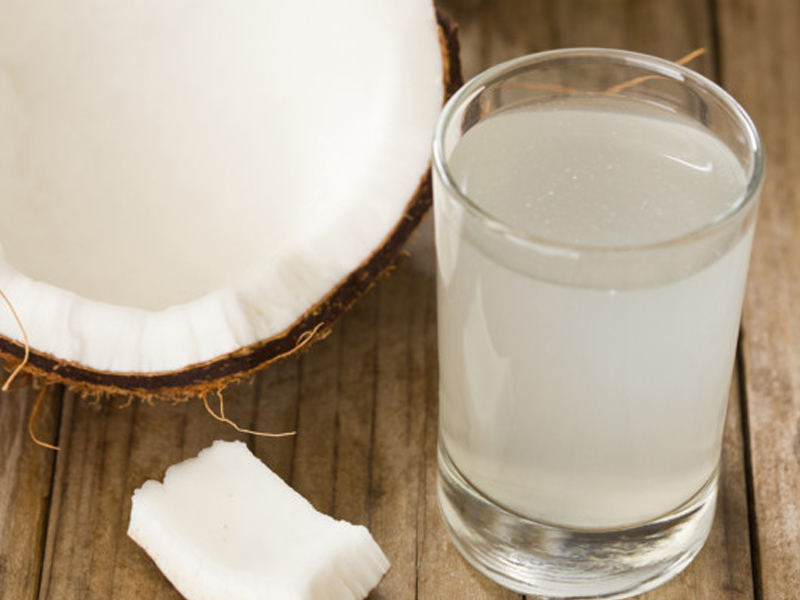
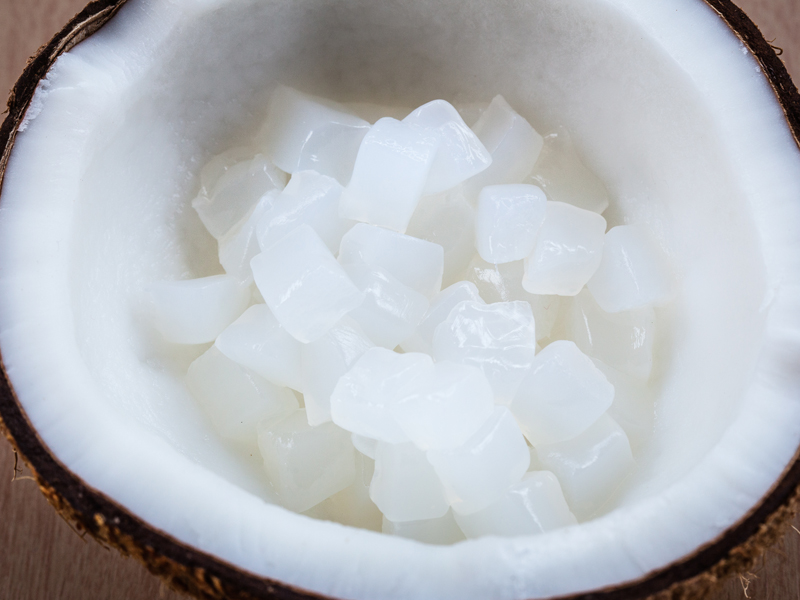
Nata-de-coco is a chewy, translucent, jelly like food stuff prepared by fermentation of matured coconut water. It is most frequently sweetened as a candy or dessert, and can accompany with various stuffs like drinks, ice cream, puddings and fruit mixes. This dessert can be prepared by culturing Acetobacter xylinum through fermentation of coconut water which produces microbial cellulose for gel formation (Cannon and Anderson 1991). For the production of nata de coco with soft surface and chewy texture, (Jagannath et al. 2008) reported that pH 4, 10 % sucrose and 0.5% ammonium was the most appropriate conditions. Culture solution was prepared by addition of sugar to the mature coconut water which is inoculated with Acetobacter xylinum, kept it for 2-3 weeks without any disturbance in a vessel. A jelly like substances was formed at the top of the vessel. This jelly was separated and washed with water in order to remove the acids adhere on the surface of the jelly and then it was cut into pieces and packed.