Vinegar
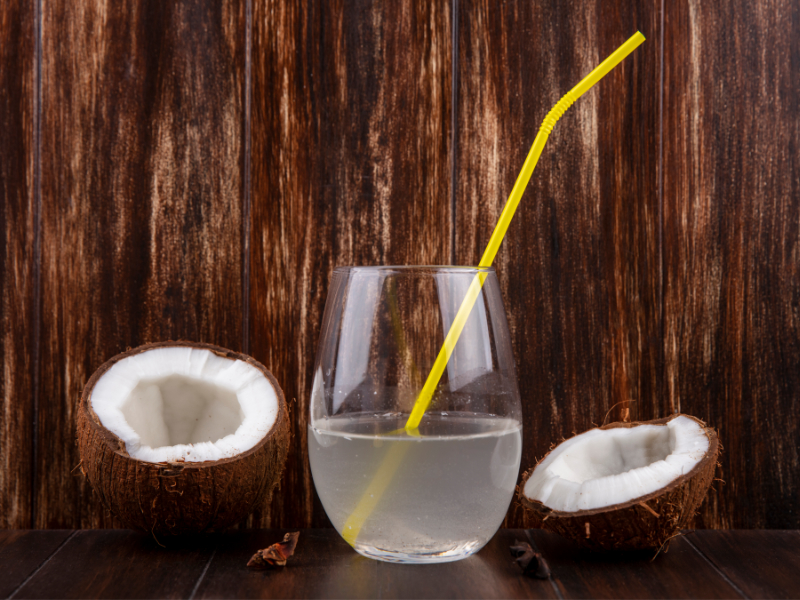
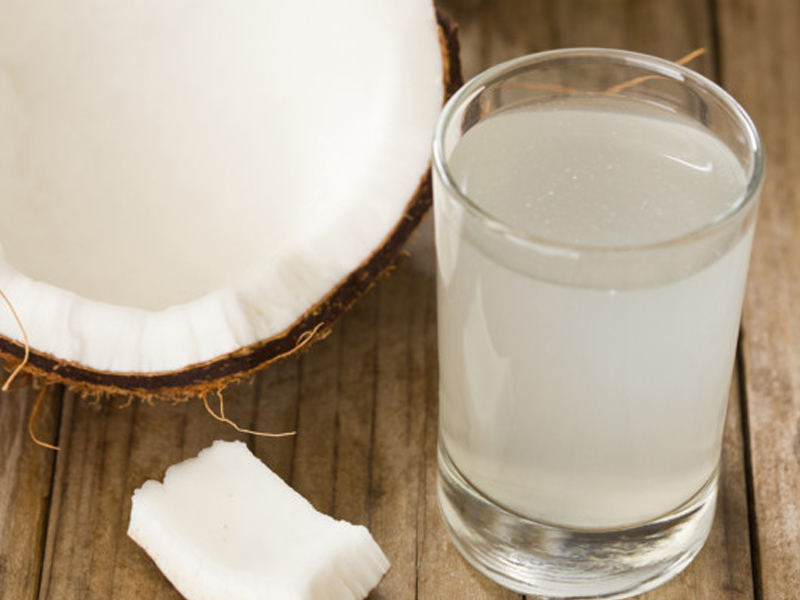
Coconut vinegar, a natural alternative to synthetic vinegar, can be made from coconut water or coconut sap. It's often used in pickles, salad dressings, and sauces as a flavour and preserving ingredient. It's high in vitamins and minerals including calcium, phosphorus, iron, and sodium, and it's also anti-inflammatory and anti-microbial (Shahidi et al. 2008). Coconut vinegar is made from sugar-enriched coconut water that has undergone alcoholic and acetic fermentation. After filtering, the coconut water is sweetened with refined sugar to a Brix of 15 and the combination is brought to a boil. After cooling, the pasteurized mixture is inoculated with active dry yeast (1.5g/liter). After 5 to 7 days of treatment. The coconut vinegar is extracted by siphoning after an acidity process that lasted up to 7 days.
Vinegar is the product obtained by acetic acid fermentation of alcohol containing solutions and is used as an acidulant in foods. It must contain at least 4% acetic acid.It is usually colourless or has the colour of the raw material. The pH is between 2.0 and 3.5.
It is an oxidative fermentation in which diluted solutions of ethanol are oxidized by Acetobacter (bacterial culture) with the oxygen of air to acetic acid and water.
C2H5 OH + O2 => CH3 COOH + H2O + 439 kcal (Heat)
(Ethanol) (Acetic acid)
All 'Mashes' (alcoholic ferment) contain ethanol, water and nutrients for the acetic acid bacteria. Vineger is designated by the particular raw material used viz. Sugar/jaggery vinegar, coconut vinegar etc.