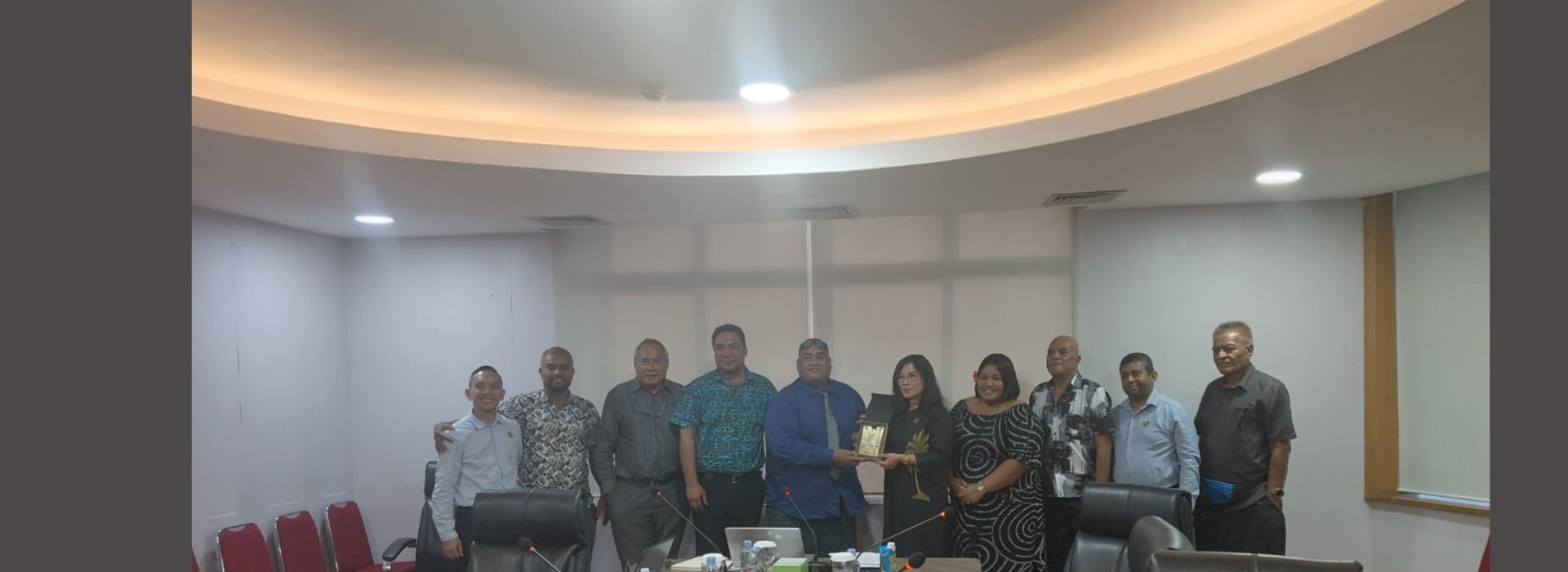
The International Coconut Community Secretariat facilitated a two-day technical and learning visit for a high-level parliamentary delegation from the Republic of Kiribati, comprising members of the Cottage Industry Development Committee of the Kiribati Parliament. The visit was organized to provide firsthand exposure to innovative coconut processing technologies, value-added coconut products, and successful coconut-based enterprises in Indonesia. The delegation was led by Hon. Dennis Waysang Kum Kee, Chairman of the Cottage Industry Development Committee, and included Hon. Mrs. Ruta Babo Nemta, Deputy Speaker of the Kiribati Parliament and Vice Chairlady of the Committee, Hon. Tinian Reiher, Hon. Tibanga Taratai, Hon. Matanga Aran, and Mr. Betarim Rimon, Secretary of the Committee. The visit took place from 2–3 June 2026 and formed part of the delegation’s broader mission to identify opportunities for strengthening the coconut sector and cottage industries in Kiribati.
The program commenced on 2 June with a technical visit to PT. House of Charcoal Indonesia in Bogor, one of Indonesia’s leading producers of coconut shell charcoal-based products. During the visit, the delegation observed the complete production process of coconut shell charcoal briquettes for the international shisha market, including shell carbonization, briquette manufacturing, quality assurance procedures, packaging, and export requirements.
The delegation also gained valuable insights into the environmental and socio-economic benefits of coconut shell charcoal production. Discussions highlighted how the use of coconut shells as a renewable raw material can reduce pressure on forest resources by providing an alternative to wood charcoal while simultaneously creating additional income opportunities for coconut smallholders, including women. The delegation learned how value addition from what is often considered an agricultural by-product can generate substantial economic returns and contribute to rural livelihoods and sustainable development.
The ICC Secretariat expressed its appreciation to Mr. Asep Mulyana, Chief Executive Officer of PT. House of Charcoal Indonesia, for generously sharing his expertise and practical experience with the delegation. His continued support for knowledge-sharing initiatives has benefited numerous stakeholders across the global coconut sector. Following the field visit, the delegation visited the ICC Secretariat in Jakarta, where they were welcomed by Dr. Jelfina C. Alouw, Director General of ICC. During the meeting, Dr. Alouw delivered a comprehensive presentation on the global coconut sector, covering global production trends, market developments, value-added product opportunities, the role of ICC in supporting member countries, and strategic pathways for enhancing the competitiveness and sustainability of coconut industries worldwide. The presentation also highlighted the current status of Kiribati within the global coconut community and the opportunities available through ICC’s technical cooperation, capacity-building programs, research networks, and market-linkage initiatives.
The meeting was followed by a productive discussion on potential avenues for collaboration between ICC and Kiribati. Discussions focused on strategies to strengthen the country's coconut sector through value addition, entrepreneurship development, market-oriented production, skills enhancement, and greater participation in regional and international coconut development programs.
On 3 June, the delegation visited the Dewacoco Store in Serpong, a unique retail and educational outlet showcasing a diverse range of coconut-based products. The visit provided the delegation with a practical demonstration of how virtually every part of the coconut palm can be transformed into marketable products, ranging from food and beverage products to handicrafts, household items, personal care products, and other value-added innovations.
The delegation engaged in discussions with Ms. Namanya Anna Valentina, Chief Executive Officer of PT Dewa Agricoco Indonesia, who shared her experiences in developing coconut-based enterprises and expanding market opportunities for innovative coconut products. The visit offered valuable insights into product diversification strategies and demonstrated the vast potential of the coconut palm as a source of sustainable economic development.
Speaking during the program, ICC Deputy Director General. Mr. Nuwan reaffirmed the Community’s commitment to supporting its member countries through knowledge sharing, technical cooperation, capacity building, and the promotion of sustainable coconut-based industries. The visit underscored the importance of strengthening linkages between policymakers, industry practitioners, and development organizations to unlock new opportunities for coconut-growing communities.
The ICC Secretariat expresses its appreciation to all participating organizations and stakeholders for their support in making the visit a success and looks forward to continued collaboration with the Government and people of Kiribati in advancing a resilient, sustainable, and prosperous coconut sector.